
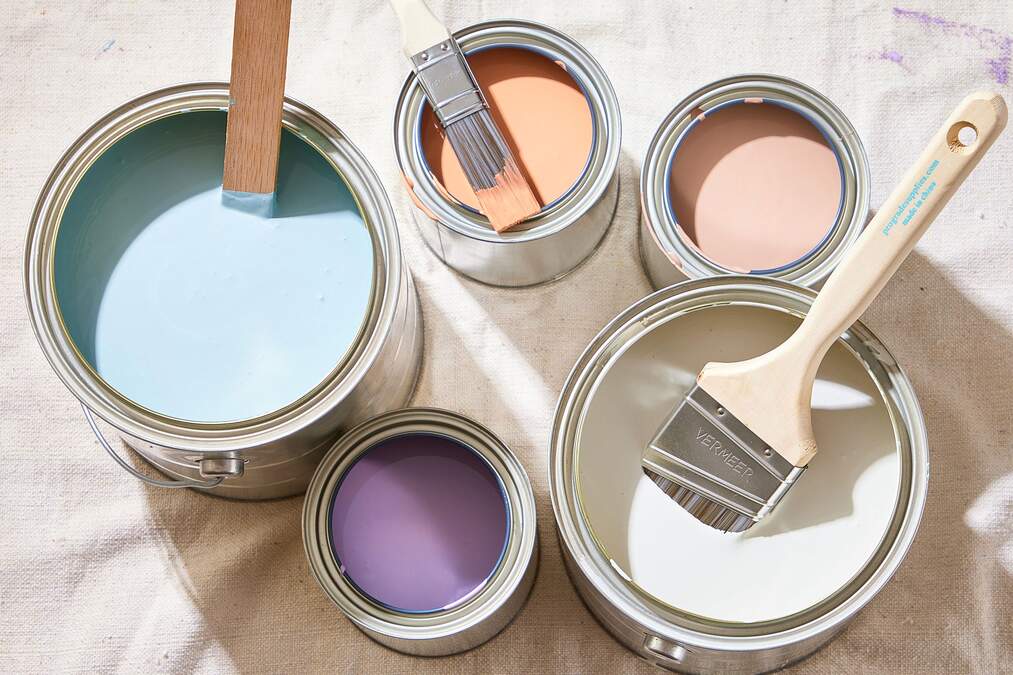
Color gets all the attention. But walk into a freshly painted room and something feels off — the walls look dull and chalky, or weirdly shiny, or the kitchen already shows scuff marks after two weeks. Nine times out of ten, the problem isn’t the color. It’s the finish.
Paint finish — also called sheen — is the single most overlooked decision in any interior painting project. It affects how a room looks, how long the paint lasts, how easy it is to clean, and whether your walls will show every imperfection or hide them gracefully.
After 15+ years painting homes across Dallas and the DFW Metroplex, choosing the right finish for the right surface is something we build into every project from the start. This guide walks through every interior paint finish, what it does, where it belongs, and what happens when you use the wrong one.
What Paint Finish Actually Means
Paint finish refers to how much light the dried paint surface reflects — its sheen level. The higher the sheen, the more light bounces off the wall. The lower the sheen, the more light is absorbed.
Sheen is measured as a percentage of light reflected at a 60-degree angle. In practical terms, this creates a spectrum from completely flat (no reflection) to mirror-like high gloss (maximum reflection).
Why does this matter beyond aesthetics? Because sheen level directly determines:
- Durability — higher sheen means a harder, more tightly bonded film that resists scuffs and cleaning better
- Washability — flat paint wipes off when you try to clean it; semi-gloss scrubs clean repeatedly
- Imperfection visibility — flat finishes hide wall flaws; high-sheen finishes magnify them
- Light behavior — higher sheen reflects more light into a room; lower sheen creates a softer, more absorptive look
The right finish for a room is the intersection of how that room is used, the condition of the walls, and the visual effect you’re after.
The Five Interior Paint Finishes — Explained
Flat / Matte
Sheen level: 0–5% Light behavior: Absorbs light, no reflection
Flat paint — sometimes labeled matte — has essentially no sheen. It creates a velvety, soft surface that absorbs light rather than reflecting it back. The result is a quiet, sophisticated look that makes colors appear rich and deep.
Where it works best:
- Ceilings — flat is the standard choice for ceilings across the industry. Ceilings receive raking light from every window and lamp in the room, which means any texture variation, drywall seam, or patch is amplified. Flat paint hides all of it.
- Adult bedrooms — low-traffic, easy to keep clean, benefits from a soft absorptive finish
- Formal living and dining rooms — spaces that prioritize aesthetics over durability
- Feature walls with texture — flat finish shows off texture; sheen would fight it
Where it fails:
- Kitchens and bathrooms — moisture and grease ruin flat paint quickly
- Hallways and high-traffic areas — scuffs and marks are very difficult to clean without removing paint
- Homes with kids or pets — flat paint simply cannot withstand repeated cleaning
The tradeoff: Flat paint is the least durable finish. It hides imperfections better than anything else, but when it gets marked up, you’re repainting — not wiping it down.
Eggshell
Sheen level: 10–25% Light behavior: Very subtle, soft sheen — similar to the surface of an actual eggshell
Eggshell is the most popular interior wall finish for a reason. It sits in the sweet spot between flat’s imperfection-hiding softness and satin’s durability — enough sheen to be washable, not so much that it highlights every wall flaw.
Where it works best:
- Living rooms — the ideal balance of beauty and practicality
- Dining rooms — refined look, handles moderate cleaning
- Primary and guest bedrooms — softer than satin, still wipeable
- Hallways with moderate traffic
- Most general interior wall applications in Dallas homes
Where it falls short:
- Kitchens with heavy grease and steam — eggshell holds up, but satin is better
- Bathrooms — adequate for a powder room, but satin is a better call for full baths
- Very high-traffic areas with constant scuffing
The tradeoff: Eggshell hides imperfections better than satin and looks softer and more refined on most walls. If you’re not sure which to choose for a room, eggshell is almost always the right default.
Satin
Sheen level: 26–40% Light behavior: Noticeable pearl-like sheen with clear reflectivity
Satin has a smooth, slightly luminous quality that reads as polished without being shiny in an obvious way. It reflects more light than eggshell, which makes rooms feel brighter and more dynamic — but also means wall imperfections become more visible if prep wasn’t thorough.
Where it works best:
- Kitchens — handles grease aerosol, steam, and repeated wiping better than eggshell
- Bathrooms — moisture resistant, easy to clean, durable
- Kids’ rooms and playrooms — stands up to crayon, sticky hands, and frequent cleaning
- Laundry rooms and mudrooms — high-contact, high-moisture utility spaces
- Interior doors when a softer look than semi-gloss is preferred
Where it falls short:
- Rooms with less-than-perfect walls — satin’s higher sheen will reveal drywall seams, patches, and roller marks that flat or eggshell would hide. On well-prepared walls it looks excellent; on walls with visible imperfections it can look worse than a lower sheen
- Formal rooms where a softer, quieter aesthetic is the goal
The tradeoff: Satin outperforms eggshell for durability and washability in high-use spaces, but it requires better surface prep to look its best. If you’re choosing between eggshell and satin for a busy household, satin will hold up better over time.
Semi-Gloss
Sheen level: 41–69% Light behavior: Clear reflective surface, noticeably shiny
Semi-gloss is a workhorse finish. It creates a hard, smooth surface film that resists moisture, stains, and scuffs better than any finish below it on the sheen spectrum. It’s not subtle — semi-gloss has a clear, clean shine — but it’s incredibly durable and easy to maintain.
Where it works best:
- Trim, baseboards, and moldings — the standard finish for all painted woodwork in residential interiors
- Interior doors — durable, crisp, easy to wipe down
- Window frames and casings
- Kitchen cabinets — holds up to grease, cleaning products, and daily contact
- Bathroom walls where maximum moisture resistance is needed
- Wainscoting and chair rails
Where it falls short:
- Main wall surfaces in living areas and bedrooms — the sheen is too pronounced for most wall applications, and it will highlight every imperfection mercilessly
- Ceilings — never use semi-gloss on a ceiling; the sheen will amplify every texture variation and make the ceiling the visual focus of the room
The tradeoff: Semi-gloss belongs on woodwork and high-contact surfaces. It’s not typically a wall finish for living spaces, but it’s indispensable on trim and doors.
High-Gloss
Sheen level: 70%+ Light behavior: Mirror-like reflectivity, maximum shine
High-gloss is the most durable and most demanding finish in the spectrum. It cures to an extremely hard, slick surface that can be cleaned aggressively and stands up to almost anything. It also amplifies every surface imperfection so severely that it requires near-perfect surface preparation to look good.
Where it works best:
- Front doors — high-gloss makes a front door look intentional, polished, and high-end
- Kitchen cabinets in a modern or high-contrast design scheme
- Furniture and built-ins where a lacquer-like finish is the goal
- Accent elements where maximum visual impact is intended
Where it falls short:
- Walls — almost never used on interior walls in residential applications
- Ceilings — never
- Any surface that wasn’t perfectly prepped — high-gloss is unforgiving
The tradeoff: High-gloss is a specialty finish used strategically. It’s stunning when used correctly on the right surface; it looks terrible when used in the wrong place or over imperfect preparation.
The Finish Reference Table
| Room / Surface | Recommended Finish | Why |
|---|---|---|
| Ceilings | Flat / Matte | Hides texture, seams, and patches |
| Living room walls | Eggshell | Soft look, moderately washable |
| Dining room walls | Eggshell | Refined, handles moderate cleaning |
| Adult bedroom walls | Eggshell or Matte | Low traffic, prioritize soft appearance |
| Kids’ bedroom walls | Satin | Crayon-resistant, cleanable |
| Kitchen walls | Satin | Handles grease, steam, cleaning |
| Bathroom walls | Satin or Semi-Gloss | Moisture resistant |
| Hallways | Eggshell or Satin | Moderate to high traffic |
| Trim, baseboards, moldings | Semi-Gloss | Durable, crisp, easy to clean |
| Interior doors | Semi-Gloss | Hard-wearing, wipeable |
| Front door | High-Gloss or Semi-Gloss | Impact, durability |
| Kitchen cabinets | Semi-Gloss or High-Gloss | Maximum durability |
| Home office walls | Eggshell or Matte | Focus-supporting, low distraction |
Do I Need Primer? The Honest Answer
This is one of the most common questions we get, and the honest answer is: it depends on the surface and condition — but when in doubt, prime.
You can skip primer when:
- Repainting over previously painted walls that are in good condition
- The new color is similar in depth to the existing color
- The surface is clean, dry, and has no gloss finish
- There are no stains, patches, or repaired areas
You must prime when:
- Painting new drywall — bare drywall is extremely porous and will drink paint unevenly without primer, creating a blotchy, patchy result. This is non-negotiable.
- Painting over patches or repairs — patched spots absorb paint differently than the surrounding painted wall. Spot-prime every patch before topcoat.
- Covering stains — water stains, smoke, nicotine, crayon, and marker bleed through regular paint no matter how many coats you apply. Only a stain-blocking primer stops bleed-through reliably.
- Making a dramatic color change — going from a deep navy to a light cream without primer means applying far more topcoat than necessary. A tinted primer matched to your new color cuts the topcoat coats needed in half.
- Painting over oil-based paint with latex — latex paint will not adhere properly to oil-based paint without a bonding primer. This is a common issue in older Dallas homes where oil-based alkyd was the standard through the 1990s.
- Any previously glossy surface — gloss repels new paint. The surface needs to be either sanded dull or primed with a bonding primer before repainting.
What about “paint and primer in one” products?
Paint-and-primer-in-one products have their place — they’re a good option when repainting a previously painted surface in good condition without a dramatic color change. They are not a substitute for a proper primer coat on new drywall, stained surfaces, or significant color transitions. Think of them as an opportunity to use an additional coat of a quality finish product rather than a true primer replacement on difficult surfaces.
Does Paint Brand Matter?
Yes — more than most homeowners expect. The difference between a premium paint and a builder-grade budget paint isn’t just marketing. It comes down to:
- Pigment load — premium paints contain more pigment per gallon, which means better hide, truer color, and coverage in fewer coats
- Resin quality — better resins create a harder, more flexible film that adheres better and lasts longer
- UV resistance — relevant for Dallas rooms with significant sun exposure; premium paints hold color longer under UV
- Washability — premium paints at the same sheen level outperform budget paints on cleanability
For interior residential work, we consistently use and recommend Sherwin-Williams Emerald and Benjamin Moore Regal Select as our primary lines. They cover better, apply more smoothly, and hold up longer than mid-tier and budget products — and in the long run, the cost difference per gallon is smaller than the cost of repainting sooner.
What about Behr from Home Depot? Behr’s premium lines (Marquee) are solid products and meaningfully better than their base lines. For a straightforward repaint of walls in good condition, Behr Marquee performs well. For challenging surfaces, significant color changes, or when longevity is the priority, we recommend Sherwin-Williams or Benjamin Moore.
A Note on Mixing Finishes Intentionally
One of the most effective and underused design techniques in interior painting is intentionally mixing finishes — using different sheens as a design element rather than just a functional one.
A few combinations that work beautifully:
- Matte walls with semi-gloss trim — the contrast between the flat, absorptive wall and the crisp, reflective trim creates clean definition and a polished, architectural look. This is the standard finish pairing in high-end residential work.
- Eggshell walls with a matte ceiling — most common approach; the slightly softer ceiling recedes visually while the walls have enough sheen to be practical
- Satin walls with high-gloss doors — in a contemporary home, this contrast creates a deliberate, designed quality that feels intentional
- Color drenching with consistent finish — if you’re doing a full color drench (walls, ceiling, trim in the same color), keeping a consistent finish throughout creates a cocoon-like, seamless effect
The Bottom Line
Choosing the right paint finish for each room isn’t complicated once you understand the principles — match sheen to how the space is used, the condition of the walls, and the visual effect you want. The two most common mistakes are using flat paint in high-traffic areas (it won’t survive) and using semi-gloss on walls that aren’t perfectly prepped (every imperfection will show).
When in doubt: eggshell on most walls, semi-gloss on all trim, flat on ceilings. That combination works in almost every room and every home.
Planning an Interior Paint Project in Dallas?
At East Dallas Painting, we specify the right finish for every surface before we open a single can. We’ll walk through your home, assess the surfaces, and give you honest recommendations on product, finish, and approach — no upselling, no shortcuts.
Call us today for a free estimate: 📞 214-612-6235 | 877-275-8751 📧 info@eastdallaspainting.com
Or book directly online — we’ll come to you and give you a straight answer on what your project actually needs.
East Dallas Painting serves Dallas, Plano, Richardson, Garland, Mesquite, Rockwall, and the greater DFW Metroplex.